Residential Flood Cleanup in Swayzee
When water is spreading through your Swayzee home right now, Swayzee Water Restoration delivers fast, around the clock emergency response for burst pipes, sewage backups, basement flooding, and storm intrusion. Our IICRC certified crews handle every phase from extraction through reconstruction and coordinate directly with your insurance carrier.
Every missed call from Swayzee gets a call back within 15 minutes.

Water emergency in Swayzee? Swayzee Water Restoration dispatches IICRC certified crews 24/7 for water extraction, flooded basement cleanup, burst pipe response, and complete structural drying, with every step documented for your insurance claim. Call (765) 517-7678.
- Services: water damage restoration, basement flooding, sewage cleanup, storm damage
- Service area: Swayzee, Grant County, IN and surrounding areas
- Response time: Same day for Swayzee inquiries; 24/7 emergency service available
- Licensed and insured (License #RC21100059)
- Serving Swayzee, IN since 2018
Schedule Your Free Damage Assessment
Inspection in a Swayzee home is a room by room walkthrough, not a glance and a guess. We measure walls with non penetrating meters at multiple heights, check baseboards and trim, probe subfloors, pull insulation in suspect cavities, look behind cabinets and appliances, under sinks, around water heaters and washing machines, along basement perimeter and slab joints. Thermal imaging cameras map hidden moisture behind finished surfaces, penetrating meters confirm what the thermal reads, and a hygrometer logs ambient temperature and relative humidity so drying targets can be set correctly. The reason this matters: the most expensive failure in water restoration is moisture missed during the first visit, the kind that quietly feeds mold growth thirty days after a Swayzee homeowner thought the job was finished.
I agree to be contacted by Swayzee Water Restoration regarding my inquiry.
Roof leaks become water damage the moment they reach living space. Swayzee storm seasons drive rain past compromised shingles and flashing into attics and ceilings, where insulation soaks silently. Water damage restoration handles the interior while the roof gets its own fix.
Emergency board up and tarping stabilize the scene when water came through damage: storm openings, roof breaches, broken windows. Securing the Swayzee property first stops the loss from growing while extraction and drying handle what already happened.
Choosing a water damage restoration company in Swayzee comes down to trust under pressure. Local crews, live answers at 2 a.m., written scopes before work begins, and drying verified by meters instead of promises. That's the standard Swayzee homeowners should hold every restoration call to, including this one.
Payment Options That Work for You
We partner with established lenders so Swayzee Water Restoration clients can spread the cost of a major restoration project into manageable payments. Ask your project lead about current options.
Pay for your project at a later time, but lock in today's pricing. Ideal for homeowners waiting on insurance settlements.
- No payments for 12 months
- No interest if paid in full
- Lock in current pricing today
Divide your project cost equally across 12 months with zero interest. Most homeowners choose this option for predictable budgeting.
- Equal monthly payments
- 0% interest for 12 months
- Simple, predictable budgeting
Spread your investment over up to 20 years with fixed equal payments. The right choice for larger projects or homeowners who prefer lower monthly amounts.
- Up to 20-year terms available
- Fixed equal payments
- Ideal for larger restoration projects
Subject to credit approval. Ask your project lead for current terms and promotions.
Swayzee Properties, Start to Finish
Whether it's a burst pipe or a storm, the work starts with stopping the water and getting the house dry.
Water Damage Restoration in Swayzee
Serving Swayzee: full scope residential water damage restoration covering source identification, extraction, structural drying, and verification per IICRC S500. We handle clean water losses from burst supply lines, appliance failures, and overflow events through final restoration.
Learn moreBasement Flooding in Swayzee
Basement water extraction and drying for groundwater intrusion, sump pump failures, and foundation seepage common in Swayzee homes during heavy rain events. We dry the slab, lower walls, and stored contents, then restore finished basement areas.
Learn moreSewage Cleanup in Swayzee
Serving Swayzee: category 3 black water cleanup for sewer backups, toilet overflows with solids, and septic failures. Work includes contained removal of affected materials, antimicrobial treatment, and verified decontamination per IICRC S500 protocols.
Learn moreStorm Damage in Swayzee
In Swayzee, water mitigation following severe weather, including wind driven rain intrusion, broken window infiltration, and tornado related building envelope failures. Crews extract, dry, and rebuild affected interior areas after the structure is stabilized.
Learn moreCommercial Water Restoration in Swayzee
Water damage restoration for Swayzee commercial properties, retail spaces, offices, and multi tenant buildings. Scaled equipment and after hours scheduling keep business interruption to a minimum.
Learn moreCommercial Flood Damage Cleanup in Swayzee
For Swayzee addresses, large scale flood water extraction and drying for commercial structures hit by groundwater, storm flooding, or large volume plumbing failures. Includes documentation suitable for commercial insurance claims.
Learn moreCommercial Sewage Cleanup in Swayzee
Serving Swayzee: contained Category 3 cleanup for commercial restrooms, kitchens, and shared sanitary line failures. Work follows IICRC protocols with full PPE, antimicrobial treatment, and post remediation verification.
Learn moreCommercial Mold Remediation in Swayzee
For Swayzee addresses, commercial mold remediation per IICRC S520, with containment, HEPA filtration, removal of affected materials, antimicrobial treatment, and post remediation air sampling when warranted.
Learn moreCommercial Storm Damage in Swayzee
In Swayzee, commercial storm response covering wind driven water intrusion, building envelope breaches, and post storm mitigation. Crews coordinate with property managers and commercial insurance carriers throughout the project.
Learn more
Local Expertise, Real Results
Built around documented moisture readings, IICRC standards, and the long Swayzee restoration calls nobody else wanted to take.
When you discover water in your Swayzee home, you have a short window to make decisions that affect the next 30 days of your life. Swayzee Water Restoration answers Swayzee emergency calls 24 hours a day with a typical 2 hour dispatch on emergencies, IICRC trained crews, and the documentation your insurance carrier requires from photo one.
Swayzee Water Restoration provides water damage restoration in Swayzee and the surrounding Grant County communities, including Marion, Gas City, Jonesboro, Sweetser, Matthews, and Converse. We have spent years responding to the specific failures that hit Swayzee homes hardest: aging supply lines in pre war houses, sewer laterals choked with roots, basements taking on water during heavy Pipe Creek drainage events, and storm driven intrusion after severe weather. Our crew is built around IICRC certified technicians working on a licensed and insured operation. The goal is simple. When a Swayzee homeowner calls in a panic, the person who shows up knows exactly what to do and why.
Every Swayzee project follows the IICRC S500 standard for water damage restoration, with IICRC S520 governing any mold remediation work that becomes necessary. That means a documented process: initial moisture assessment using thermal imaging and penetrating meters, source identification, Category and Class determination, controlled water extraction, structural drying with monitored air movement and dehumidification, antimicrobial application where contamination warrants it, and post drying verification before a single piece of drywall goes back up. Skipping any of those steps is how homeowners end up with mold in the wall cavity six weeks later. The standards exist for a reason, and we work to them.
Our Promise
Three commitments to every Swayzee homeowner who calls us. First, fast emergency response, day or night, with crews dispatched as soon as we have your address and a description of the loss. Second, IICRC certified technicians trained to the S500 standard handling the assessment, extraction, and drying. Third, a free on site inspection before any work begins, and full coordination with your insurance carrier if you have an active claim. Plain communication, no pressure, and a scope you understand before equipment goes in.
How We Earn the Swayzee Callback
IICRC certified technicians, documented moisture readings, and clear written scopes are how Swayzee homeowners know exactly what they are paying for and why.
Around the Clock Emergency Response
Water damage in Swayzee does not wait for business hours, and neither do we. Crews are available day and night with extraction equipment, dehumidifiers, and air movers staged for fast deployment. Every hour without extraction expands the affected area, so we move quickly to contain the loss and start drying.
IICRC S500 Certified Crews
Our technicians are trained to the IICRC S500 standard, the published reference for professional water damage restoration. In practice that means proper Category determination, documented moisture readings, drying targets matched to unaffected materials, and verification before reconstruction. Certification is the difference between a job done right and a callback in two months.
Mitigation Through Rebuild
From the first extraction pass through final paint and trim, the work stays with one company. Swayzee homeowners avoid the common gap where a mitigation crew leaves and a separate general contractor takes weeks to start. We handle drywall, flooring, cabinetry, and finish work as part of the same project.
Insurance Coordination
We document every affected area with photos, video, and written moisture readings before mitigation begins, then work with your insurance carrier to align scope with coverage. Swayzee homeowners get a clear written estimate, and we communicate directly with your adjuster so the claim process moves without surprises.
Real Jobs. Real Results.
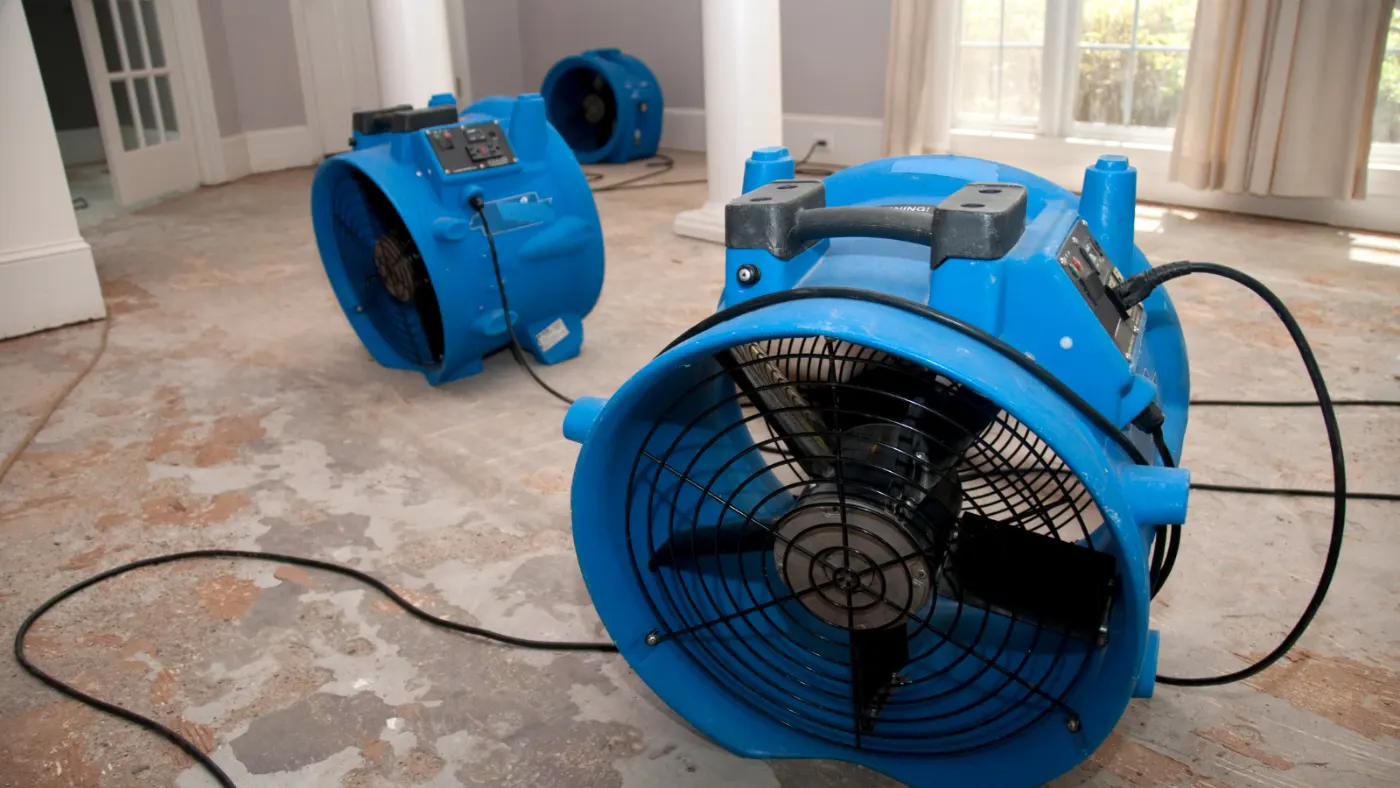
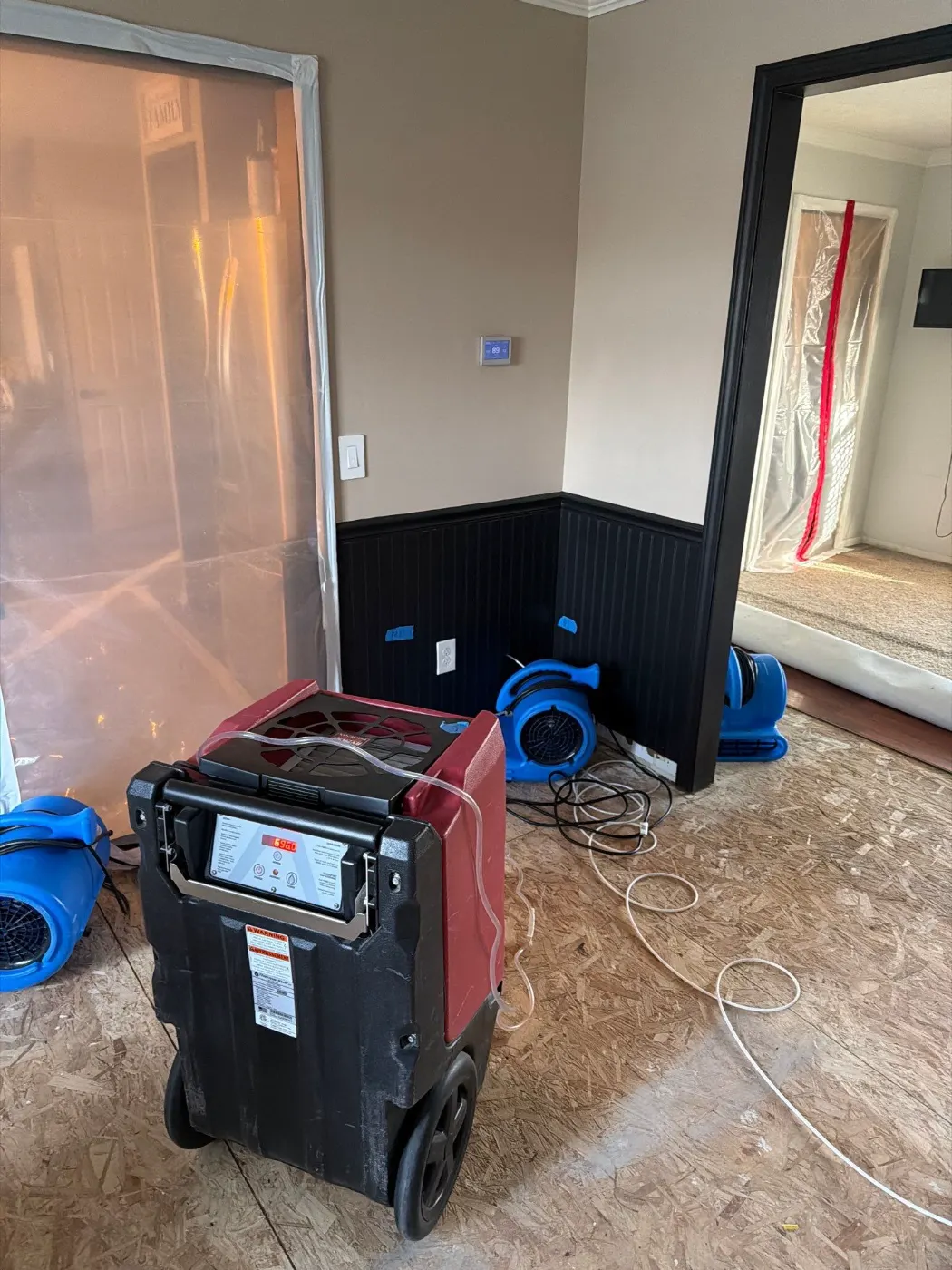
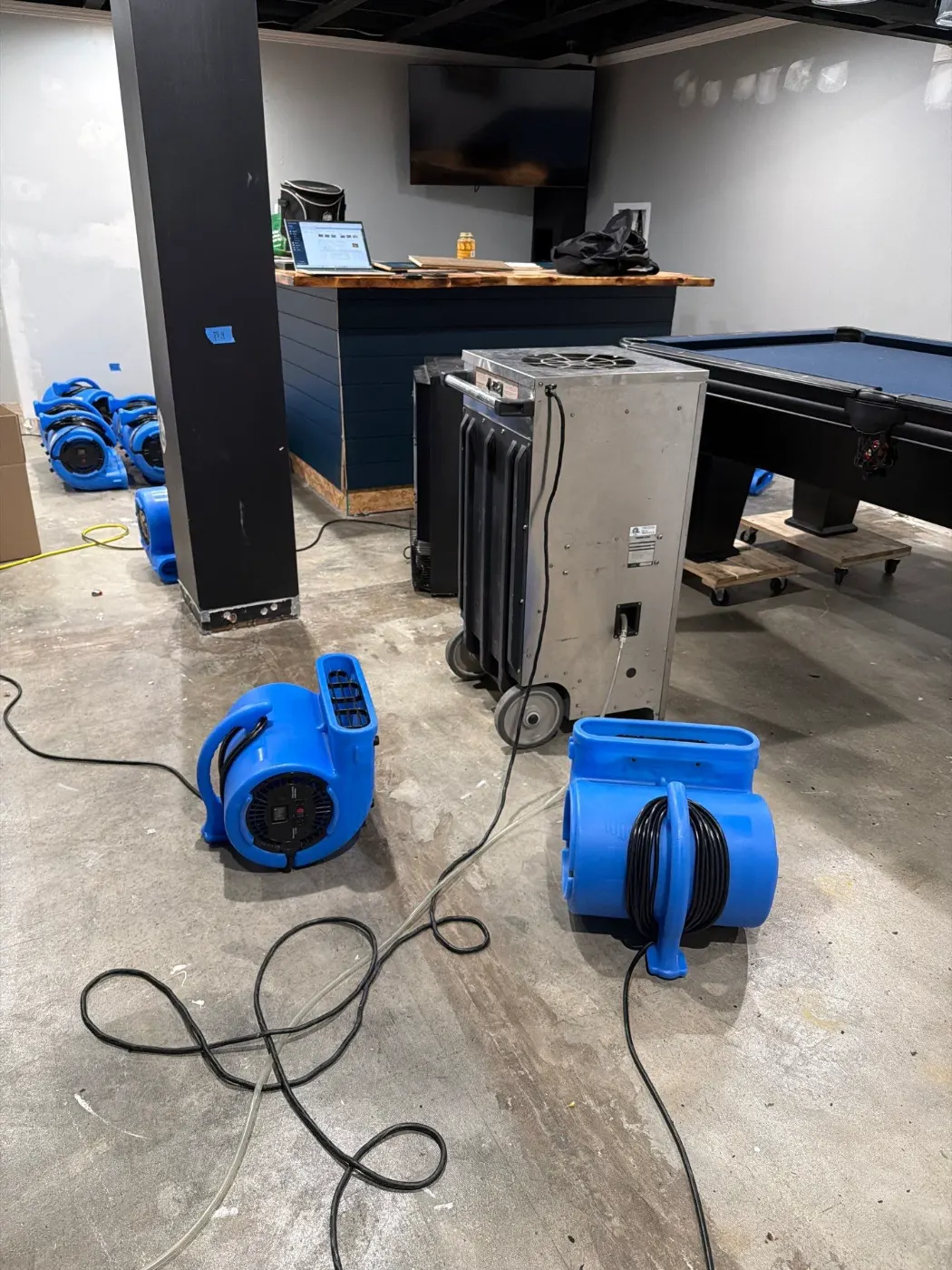
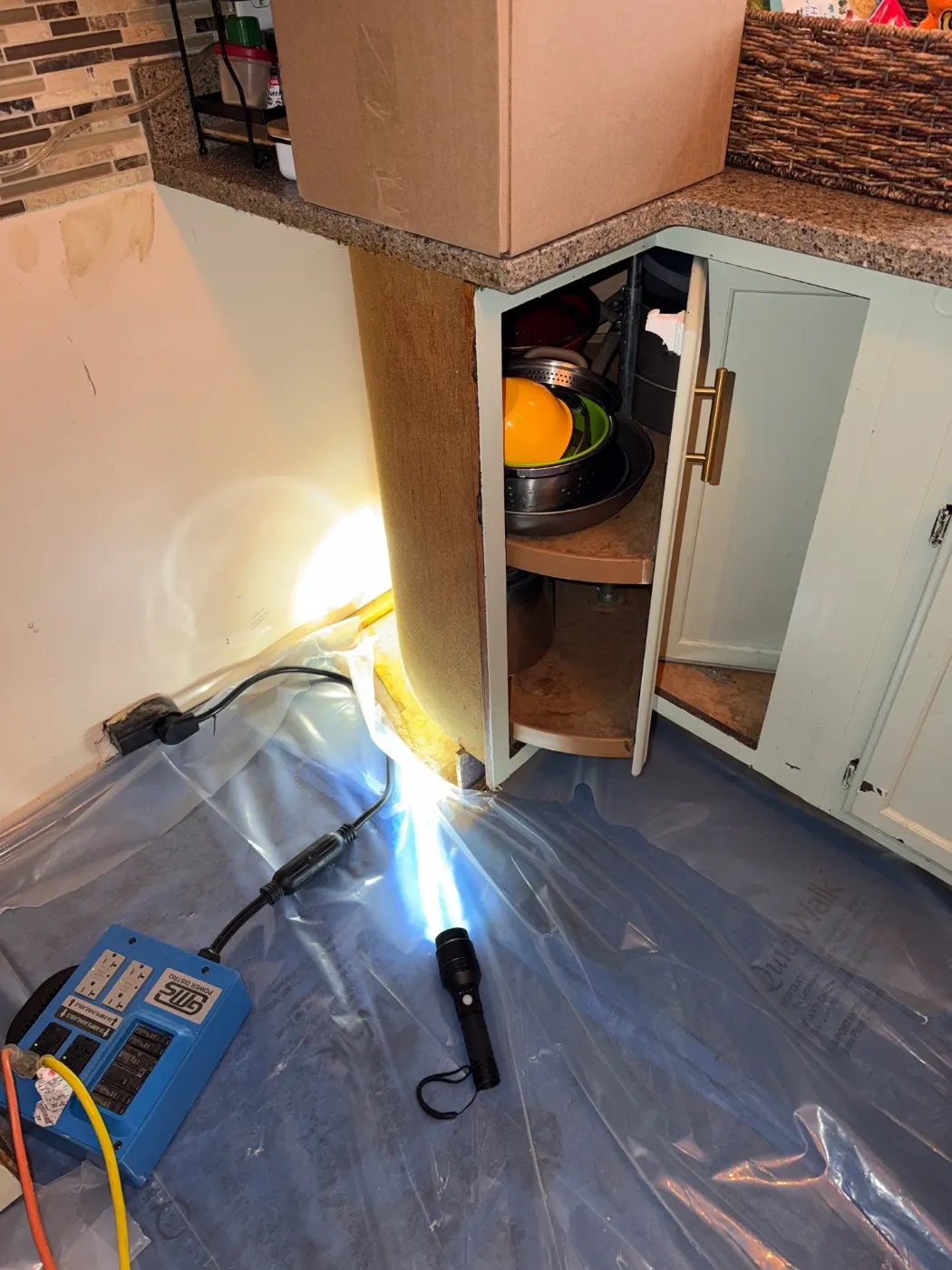
Documented projects from Swayzee and the surrounding Grant County area, from burst pipe extractions and basement flood dry outs to full Category 3 sewage remediations and post storm rebuilds. Real homes, real conditions, real results.
The Order We Work In on a Swayzee Job
The first phase on any Swayzee loss is moisture assessment and Category determination. A certified technician walks the property, identifies the source (broken supply line, dishwasher or washing machine failure, sewage backup, storm driven intrusion), and uses thermal imaging plus meter readings to map the full extent of moisture migration. Water is then classified per IICRC S500 as Category 1 (clean water from supply lines), Category 2 (gray water from appliances or toilet overflow without solids), or Category 3 (sewage, floodwater, long stagnant water). This assessment typically takes one to two hours and determines everything that follows.
Phase two is insurance documentation and coordination. Before any equipment runs, we photograph and video every affected room, log written meter readings on a moisture map, and document the source and Category determination. Then we contact your insurance adjuster directly, walk them through the scope, and justify the mitigation steps per industry standard. Most Swayzee homeowners never have to wrestle with the paperwork themselves, we handle that communication with the carrier while focusing your attention on getting the home dry. Documentation done right at the front end keeps the claim clean at the back end.
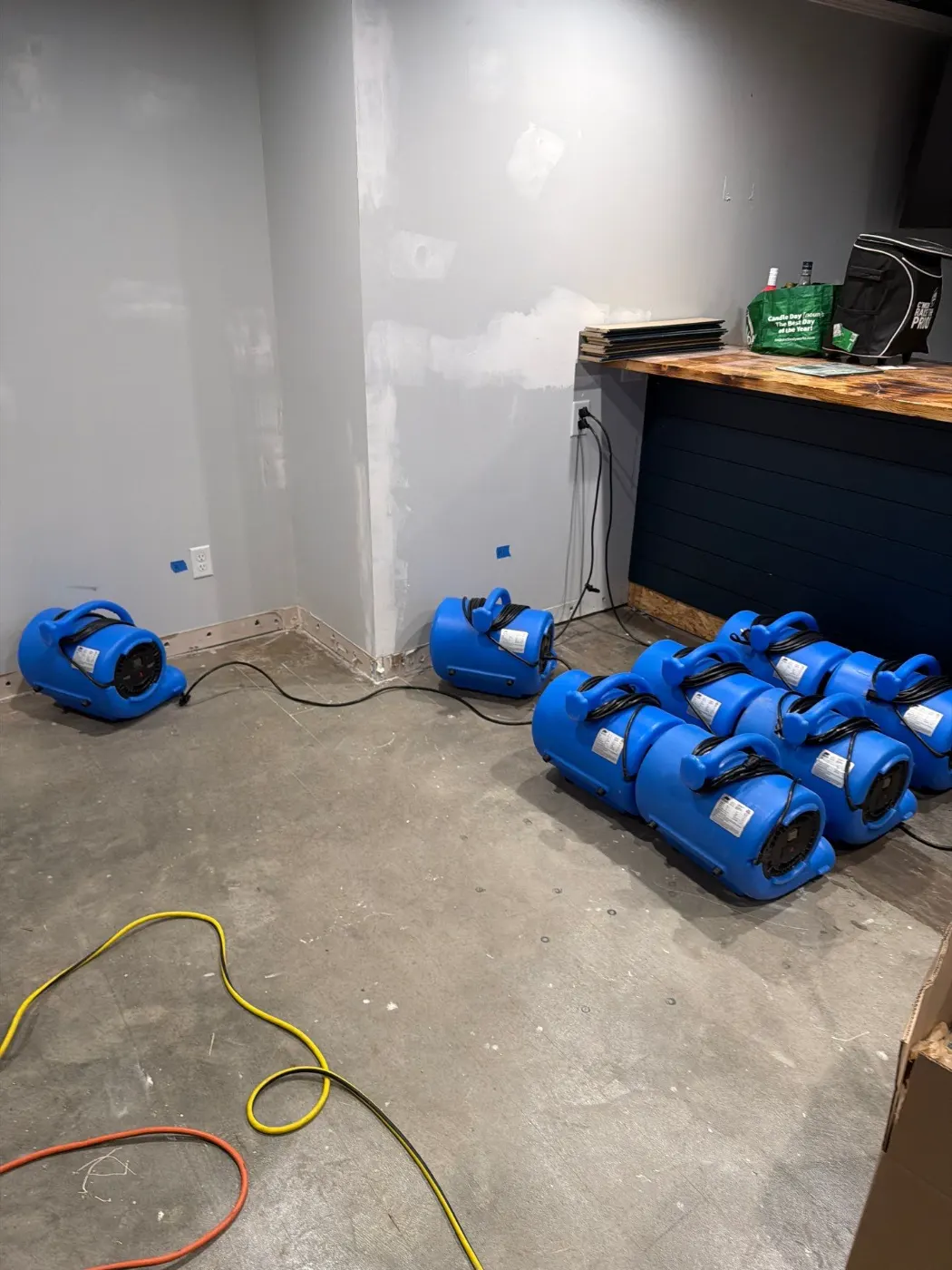
Phase three is drying execution and reconstruction. Air movers and dehumidifiers are placed based on structural drying calculations, with daily monitoring and logged moisture readings until affected materials reach the same dry standard as unaffected materials in the home. Controlled demolition happens only where materials cannot be dried in place. Once the structure is verified dry, reconstruction begins: drywall, insulation, flooring, paint, trim, cabinetry, finish carpentry. Swayzee homeowners stay informed at each transition so there are no surprises between phases.
Rapid Emergency Dispatch
When a Swayzee call comes in, a truck is loaded with extraction equipment, dehumidifiers, air movers, thermal imaging, and moisture meters, and a certified technician leads the crew to the site. The faster extraction starts, the less material has to be removed and replaced later.
S500 Category Determination
Every loss is classified per IICRC S500 protocol. Meter readings are logged, the water source documented, and a written assessment provided before drying equipment is staged. Category drives everything: containment level, PPE, antimicrobial use, and which materials can be saved versus removed.
Insurance Carrier Coordination
We work with your insurance carrier, not around them. Scope is documented and justified, photos and moisture readings shared with the adjuster, and the homeowner sees a written estimate before work proceeds. Invoicing stays transparent right through the end.
Drying to Verified Standard
Drying continues with daily monitored readings until structural materials match the moisture content of unaffected areas of the home. Reconstruction does not start until materials are confirmed dry, which is what prevents mold problems from surfacing weeks after the visible damage is gone.
Top Causes of Swayzee Water Emergencies
Tub and Shower Pan Leaks
Failed grout is a symptom, not the cause. Water passing tile is normal and the pan underneath is the barrier. When Swayzee homeowners tell us they regrouted twice and the ceiling still stains, the pan is where we look.
Water Heater Tank Failure
Water heaters fail from the inside out. The liner gives up, the steel behind it corrodes, and the seam splits with no warning noise at all. In Swayzee the calls cluster in older homes where the heater came with the house.
Heavy Rain and Saturated Ground
Surface water is a grading problem before it is a plumbing one. A patio pitched toward the house, a downspout ending at the wall, or a flower bed built up above the siding line all deliver rain exactly where it should not go.
Washing Machine Hose Burst
Braided stainless hoses fail at the crimp and old black rubber ones fail down the middle. Either way it starts as a weep at the fitting and then opens. Replacing both hoses is a cheap Saturday; drying a laundry room and the room under it is not.
Frozen Pipe in an Exterior Wall
Nothing leaks while the pipe is frozen. The damage arrives with the thaw, often the next afternoon, when the ice releases and the split opens into the cavity. A Swayzee homeowner who loses water to one fixture in January should treat that as urgent, not as an inconvenience.
Sink Drain and P-Trap Leaks
People catch trap leaks late because the water lands in a cabinet nobody empties. By the time the bottom panel bows, the subfloor under it has been through several wet cycles. In Swayzee kitchens that usually pulls in the toe kick and the next cabinet over.
Found Water in Your Swayzee Home? What to Do First
Most of what helps in the first hour is simple. Shut off the source and stay clear of anything electrical that got wet, then work through the rest of this list while our crew heads your way.
1. Close the main valve first
Find the main shutoff and close it all the way. A round handle turns clockwise, and a lever handle turns so it sits across the pipe. If the valve won't move, your water utility can usually shut off service at the meter.
2. Watch the ceiling
If water is coming through a ceiling, keep people out of the room below. A ceiling that sags or bulges can hold a lot of water, and the light fixtures in it may be wet, so turn those circuits off at the panel if you can do it safely.
3. Keep kids and pets out of dirty water
If a toilet or floor drain backed up, treat that water as dirty and keep children and pets away from it. Wear rubber boots and gloves if you have to walk through it, and wash your hands well afterward.
4. Clear a path for the crew
Our crew will need to reach the wet walls and floors, so move small items out of the affected rooms when it's safe to do it. Leave heavy furniture where it is until the crew arrives.
5. Pull up rugs and mats
Wet area rugs and bath mats hold water against the floor. Roll them up and move them to a garage or a dry room, and set any furniture that stays behind on foil squares to keep stains off the carpet.
6. Hold off on tearing anything out
Leave soaked drywall and flooring in place until our crew has measured it. Some materials dry where they are, and the readings tell us which ones can stay, so early demolition can mean replacing things that could have been saved.
7. Use the right tools for small spills
Towels and a mop handle a small amount of clean water. For more than that, use a shop vac rated for wet pickup, and keep regular household vacuums away from the water.
8. Call before the water spreads further
The sooner the crew starts drying, the more of your floors and walls can be saved. Call as soon as the water is off, even late at night, since our dispatch line runs 24/7.
Call us at any point on this list if something feels unsafe, and the crew will handle the rest when they arrive.
Three Simple Steps
Each step below gets documented, so you can see where the work stands at any point.
Emergency Dispatch
Getting there early is worth more than anything we do later. The call is answered live and a crew is assigned within 2 hours.
Assessment & Paperwork
Claim documentation is part of the job, not an upsell. The camera and the meter disagree sometimes, and the meter wins.
Restore and Prove It
Extraction, then containment, then drying, then the rebuild. The last reading is the one that matters most.
How You Get a Clear Record of the Water Damage in Your Swayzee Home
The photo report is the record of your water loss. Our crew photographs every affected room and logs moisture readings as the work goes. Then we walk you through what we found, so you understand your home before you make any decisions.
The starting point
Every report opens with the starting point of the leak, photographed before anything is moved. Water that came from outside, like a window well or a storm, gets noted the same way, with photos of where it got in.
What a thermal camera shows
A thermal camera picks up the cooler surfaces that wet materials leave behind. When the crew uses one, the images go in the report next to the meter readings that confirm what the camera found.
Pictures from start to finish
Photos go into the report at each stage of the job, starting with the damage the crew found when they first walked in. By the end, you have a visual history of the room from wet to dry.
Saving what can be saved
Drying in place is usually less disruptive than tearing out and replacing, and the readings show when it's possible. The report notes what the crew is drying in place and what it plans to remove, with photos of both.
Progress you can follow
Each visit adds a new set of readings and photos, so the report shows the drying day by day. If one spot dries slower than the rest, you'll see it in the numbers along with what the crew is changing to fix it.
We walk you through it
Once the first readings are in, we sit down with you and go through the report in plain language. You can see what's going on inside your walls from your living room and ask about anything that doesn't make sense.
A record that's yours
Keep the report with your home records. We document damage with a photo report and walk you through what we found, so you can decide with your insurance company. Your policy will say what's covered, so read it before you call them.
Call our dispatch line, and the crew will begin your photo report as soon as they reach your Swayzee home.
Questions Worth Asking Before Work Starts in Swayzee
Ask any restoration company in Swayzee these questions before you sign a work authorization.
Does my policy require a certain company?
Ask your adjuster before you sign anything, and read the work authorization so you know what you're agreeing to.
What happens if you find mold?
Ask how mold behind walls or under floors gets handled, and whether that work is priced apart from the drying.
Who handles repairs after drying?
Ask who replaces drywall, flooring, paint and trim once the structure is dry, and whether one company can do both stages.
Who will be working in my home?
Ask whether the crew works for the company you called or for a subcontractor, and who's in charge on site each day.
How will you show me it's dry?
Ask for moisture readings on the first visit and the last one, so you can see the numbers reach dry standard.
Can I see an itemized estimate?
Ask for every line item in writing. Many insurers price water losses in Xactimate, so an estimate in that format is easier for an adjuster to review.
Indiana Weather Drives Restoration Calls Year Round
Indiana weather drives a predictable pattern of Swayzee restoration calls: January cold snaps freezing and bursting uninsulated supply lines in pre-1940 crawl spaces, spring rain saturating Grant County soil and pushing groundwater into basements, and summer thunderstorms driving rain through compromised walls and windows after high wind events.
Winter Pipe Bursts
Central Indiana January lows near 16 degrees put uninsulated pipes in older Swayzee crawl spaces and exterior walls at real risk. Galvanized lines in pre-1940 homes are especially vulnerable, freezing and splitting overnight and releasing water for hours before anyone wakes up. When called in, we extract, dry the cavity, and rebuild the affected wall and floor assembly.
Spring Saturation Flooding
Heavy spring rain saturates Grant County soil and pushes groundwater against foundation walls and slab joints across Swayzee. Basements that stayed dry for years suddenly take on water through hairline cracks and floor seams. We extract standing water, dry the slab and lower walls with commercial dehumidification, and treat affected materials before mold has time to take hold.
Tornado and Severe Storm Intrusion
The March 2023 EF-2 tornado that struck Swayzee and the broader Grant County outbreak that night are a reminder of how fast storm driven water gets into a home. Compromised walls, broken windows, and lifted structures take on rain by the gallon. Crews respond with tarping coordination, extraction, structural drying, and full reconstruction once the building is stable.
Ice Dam and Winter Leaks
When snow accumulates and refreezes at roof edges, water backs up under shingles and finds its way into ceilings and exterior walls. By the time a stain appears on a Swayzee ceiling, insulation above is often already saturated. We open the affected area, dry the cavity, treat for microbial growth, and restore the finish.
Our Swayzee Neighborhood Coverage
Open a neighborhood for a quick look at the homes in that part of Swayzee and the water risks that come with them.
Where we respond near Swayzee
If you're in Swayzee or one of the towns closest to it, a crew can be on the way at any hour.
Swayzee Homes, and What Goes Wrong in Them
The conditions that decide how a Swayzee job goes.
About Swayzee Homes
Swayzee's housing stock is heavily weighted toward pre-1940 construction, with nearly 46% of all housing units built before 1940, indicating a dominant era of early 20th century homes. These older homes were built during the galvanized steel pipe era; properties built between the 1950s,1970s likely transitioned to copper supply lines, while only a small fraction (under 5%) of units were built after 2000 and may feature PEX plumbing. Swayzee's housing consists primarily of single family detached homes typical of small Midwestern towns, with older two story and one and a half story vernacular styles common given the pre-1940 build era; full basements are referenced in real estate listings for the area, and the town's flat to gently rolling Grant County terrain does not preclude crawl space construction on smaller lots. Mobile homes are also present in the housing mix based on recorded mean values.
Where We Work in Swayzee
We cover homeowners across Swayzee near Swayzee Elementary School (405 S. Washington Street), Swayzee Public Library, Swayzee Historical Museum, Walter Young West Park, Harper Park, Alumni Park, East Park, Washington Street (State Road 13 corridor).
Surrounding Areas We Serve
Our crew also covers Marion, Gas City, Jonesboro, Sweetser, Matthews, Converse.
Recent Weather Patterns
On March 31, 2023, Swayzee was struck by a confirmed EF-2 tornado with 120 mph maximum winds that traveled 3.10 miles on the ground, damaging 10,15 critical structures, lifting at least one home from its foundation, and causing extensive water intrusion as rain penetrated compromised walls and broken windows. The broader March 31, 2023 outbreak included a companion EF-3 tornado in neighboring Gas City, and the National Weather Service also logged thunderstorm wind damage to several Swayzee buildings the same night; Grant County's multi hazard mitigation plan identifies flood, hailstorm, thunderstorm, windstorm, tornado, and winter storm/ice as recurring hazards for the region.
What Our Crew Sees in Swayzee
Swayzee's pre-1940 dominant housing stock means a large share of homes carry original or early replaced galvanized plumbing, which is highly susceptible to interior corrosion, restricted flow, and pinhole leak failures that can cause slow or sudden water damage; sewer laterals serving these vintage homes are similarly aged and prone to root intrusion and collapse. The town sits in Grant County's central Indiana landscape where Pipe Creek and its tributaries create localized drainage catchments, and the county's Multi-Hazard Mitigation Plan formally identifies flood risk as a planning priority, meaning basement water intrusion and sewer backup are consistent concerns during heavy rain events. Central Indiana's pronounced freeze thaw cycle,with average January lows near 16°F,puts uninsulated pipes in older crawl spaces and exterior walls at significant risk of burst pipe events each winter, a recurring water damage pattern in communities of this age and construction profile.
The Swayzee Area
Swayzee has a population of approximately 900,918 residents (2020,2025 estimates) concentrated in roughly 393,426 households, with a median household income in the range of $52,000,$66,000 and a high owner occupancy rate of approximately 78,79%. The community skews toward families and retirees, with a median age near 39,40 years and a notably stable, long tenured residential base.
From Emergency Call to Finished Repair in Swayzee
How the work progresses from the first truck to the final coat of paint.
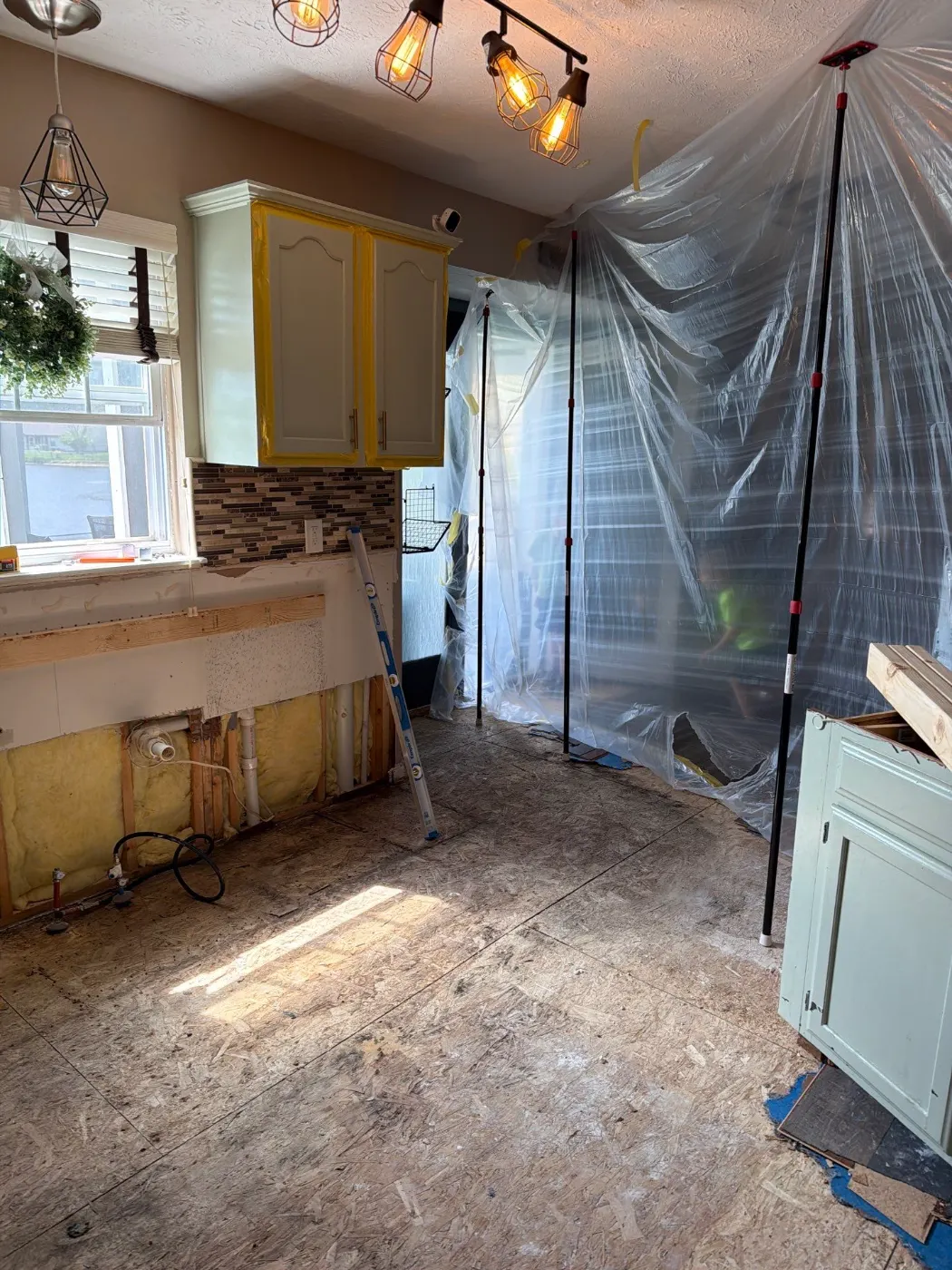
The emergency response phase in Swayzee starts the moment a truck arrives on site. Crews unload commercial water extraction equipment, commercial dehumidifiers sized to the affected square footage, professional air movers, moisture meters, and thermal imaging gear. Extraction begins promptly, with structural drying equipment placed and running the same day for most Category 1 and Category 2 losses. Work zones are contained, plastic protection is hung at doorways to keep unaffected rooms isolated, and a daily schedule is communicated to the homeowner. Logged moisture readings track progress through the dry out. Most Category 1 losses reach dry standard in three to five days. Category 2 typically runs slightly longer depending on the materials involved and how quickly the source was stopped.
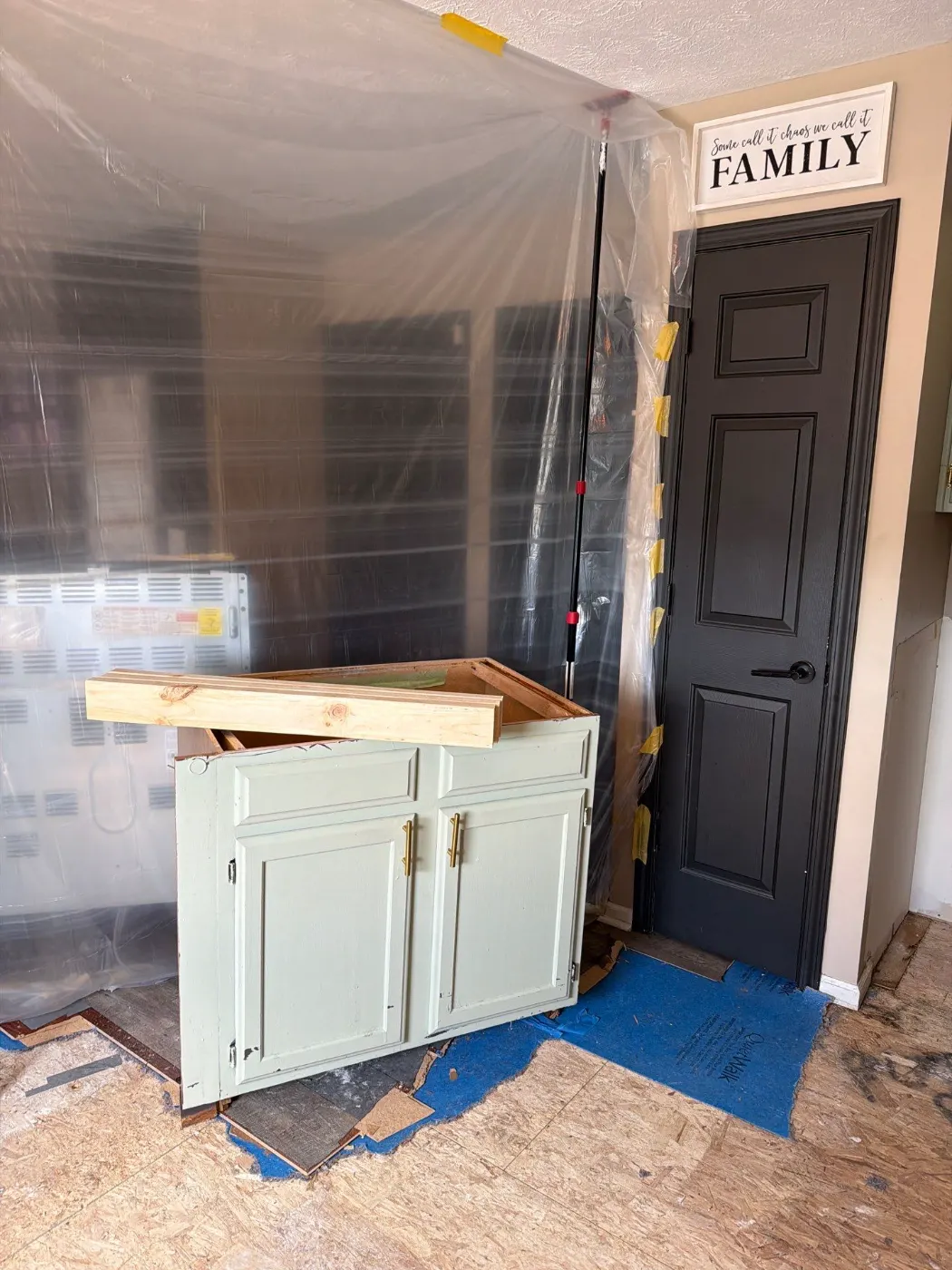
Specialized containment applies whenever Category 3 water is involved (sewage backup, floodwater, water that has sat long enough for biological growth) or when full mold remediation is required per IICRC S520. The work zone is sealed with 6-mil plastic barriers from floor to ceiling, entry points are taped, and negative air machines pull contained air through HEPA filtration before it exhausts outside the work area. Technicians wear full PPE: Tyvek suits, N95 or P100 respirators per S520, nitrile gloves, eye protection. Contaminated porous materials are cut, bagged, and disposed of per protocol, the remaining structure receives an EPA-registered antimicrobial application, and post remediation verification through air sampling is performed when the scope warrants it. Cutting corners during this phase is what leads to long term health complaints, and the certification standards exist to prevent exactly that.
Reconstruction picks up the moment the structure is verified dry. Drywall is hung, taped, mudded, sanded, primed, and painted to match adjacent walls. Flooring goes back in: carpet and pad replaced, vinyl plank installed, hardwood refinished, tile reset and grouted. Trim and baseboards are reinstalled or replaced, cabinetry repaired or rebuilt, doors rehung, and electrical and plumbing finish work coordinated so outlets and fixtures return to use. From the initial call through the final walk through, the project stays under one project number with one project manager the homeowner can reach directly. Most restoration companies hand off after drying to a separate general contractor, which means two crews, two schedules, two billing cycles, and weeks where the home sits in demolition waiting for the next phase. That gap is what we aim to eliminate.
Your Home During the Dry Out: What Swayzee Homeowners Should Know
You can stay in the house through most of the dry out while air movers and dehumidifiers run around the clock in the wet rooms. The crew checks them each day until the readings show your home is dry.
Warm rooms are normal
The rooms being dried often feel warmer than the rest of the house, since dehumidifiers give off heat as they work. That warmth helps the drying, so leave the thermostat where the crew asks.
Leave the settings to the crew
Most units have their own switch or a small control panel. The crew sets those for your rooms, so leave them as they are and let the crew make changes on their next visit.
Keep the room set up the same way
The crew will tell you which doors to keep closed and where to set the thermostat. Drying works by controlling the air in the room, so keeping it the way it was set up keeps the drying on schedule.
The equipment uses a lot of power
Drying equipment draws a steady load, so the crew spreads it across different circuits. If a breaker trips, reset it once, and call us if it trips again so the crew can move a unit.
Keep kids and pets clear
Keep children and pets away from the cords and the warm air coming off the machines. If a room is sealed off with plastic, leave the plastic up until the crew takes it down.
A crew visit each day
Someone from the crew stops by each day to take readings and move the equipment where it's needed. Tell them about anything new you notice, like a musty smell or a soft spot in the floor.
Why the drying starts right away
EPA says it's important to dry water damaged areas and items within 24 to 48 hours to prevent mold growth. That's why the crew sets up drying equipment on the first visit and checks it each day after.
When the equipment comes out
The equipment comes out when the readings show the materials are dry, and the crew shows you those readings before they pack up. If anything needs repair, that work gets scheduled once the drying is finished.
Questions during the dry out are normal, so call our line and we'll get you an answer from the crew.
Water damage pricing in Swayzee
Mitigation ranges calibrated to the Swayzee market. Final pricing depends on water volume, materials affected, and IICRC Category.
What Swayzee Homeowners Want to Know
If you're dealing with water in your Swayzee home right now, start with these answers.
Expert Swayzee Restoration Crews Available Now
Water spreading through your Swayzee home right now means every hour adds to the damage, and our crews are standing by for fast emergency dispatch any time of day or night. Free on site inspection, no obligation, and we coordinate directly with your insurance carrier from the first phone call.