Why the First 24 Hours Decide Everything
Water damage is not a single event. It is a chain reaction. Clean supply line water (IICRC Category 1) becomes Category 2 grey water within 24 to 48 hours as it picks up contaminants from carpet pad, subfloor adhesives, and household dust. Once standing water sits past 72 hours, you are usually looking at Category 3 conditions, which require containment, antimicrobial treatment, and disposal of most porous materials. Mold colonization typically begins between hour 24 and hour 48 on wet drywall, insulation, and wood framing when humidity stays above 60 percent.
This is why we measure emergency response in hours, not days. A technician on site at hour two with truck mounted extractors, air movers, and a moisture map is doing fundamentally different work than a crew arriving on day three with demo tools. The first crew is saving your home. The second crew is rebuilding it. The cost difference is rarely less than five figures, and your insurance adjuster knows this, which is why claim documentation in the first 24 hours weighs heavily on what gets covered. Our emergency water removal pricing guide walks through how response windows shape the final invoice.
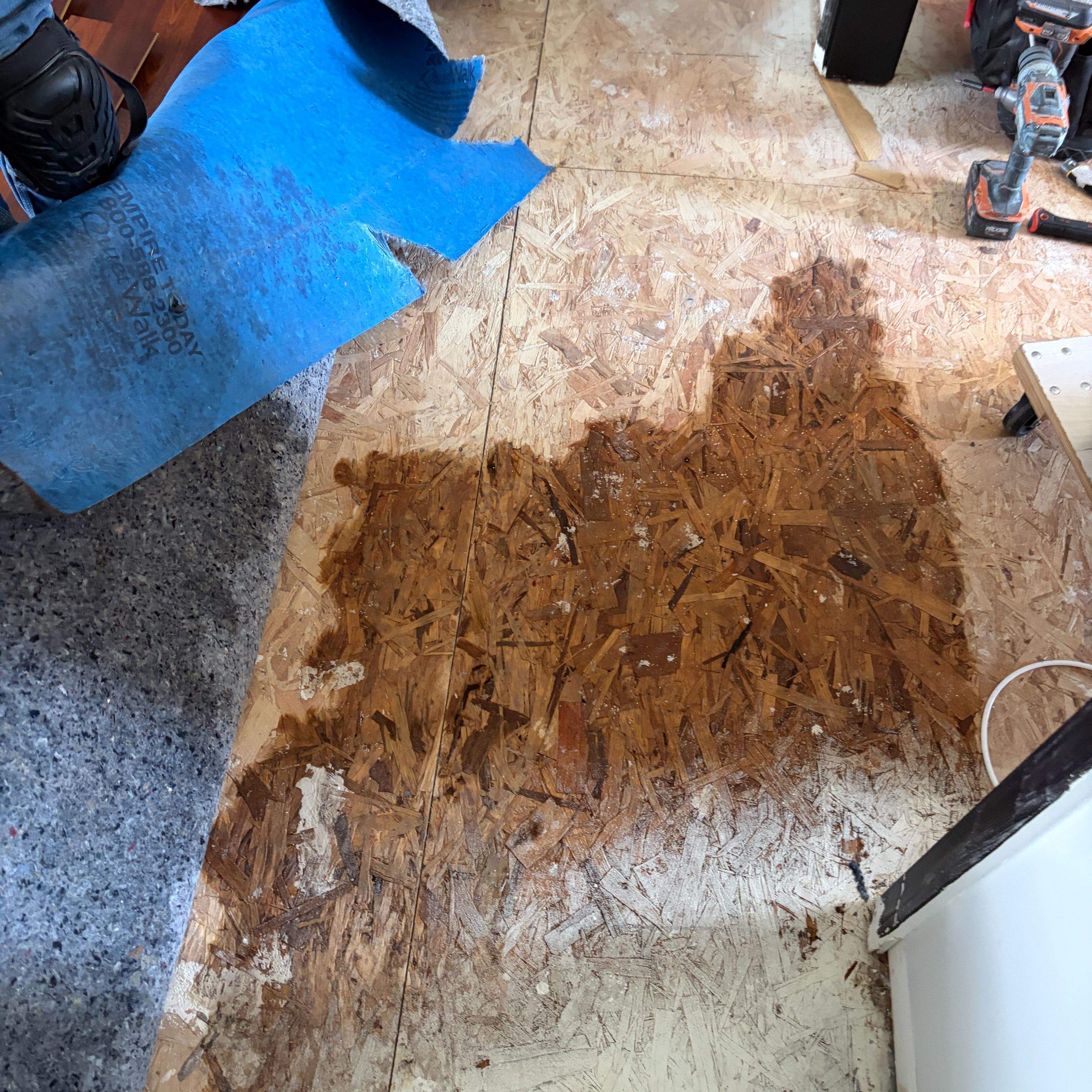
The chemistry behind these timelines is not theoretical. Gypsum drywall wicks water vertically at roughly one inch per hour for the first several hours, which means a two inch flood becomes a sixteen inch saturation line by morning. Subfloor adhesives release as they hydrate, which is why hardwood cupping looks minor at hour six and catastrophic at hour thirty. Insulation loses R-value the moment it gets wet and does not recover even after drying, so wall cavities that sit damp overnight often need to be opened regardless of how clean the source water was. These are the failure points we are racing against on every call.
Response Window Comparison: What Actually Happens at Each Hour Mark
The table below reflects what we see on real Swayzee jobs. Numbers are realistic ranges for a typical 1,500 to 2,500 square foot home with water from a supply line break, appliance failure, or storm intrusion. Sewage losses (see our sewage cleanup service for protocol) follow a more aggressive timeline and almost always require Category 3 handling regardless of response time.
| Response Window | Water Category | Materials Typically Saved | Mold Risk | Restoration Cost Range | Insurance Outcome |
|---|---|---|---|---|---|
| 0 to 2 hours | Cat 1 clean | Hardwood, drywall, cabinets, subfloor, most contents | Very low if dried under 48 hours | $1,500 to $4,500 | Routine claim, full coverage typical |
| 2 to 6 hours | Cat 1, edging toward Cat 2 | Most hardwood, drywall above waterline, cabinet boxes | Low with aggressive drying | $3,000 to $8,000 | Standard claim, documentation matters |
| 6 to 24 hours | Cat 2 grey water likely | Some hardwood (case by case), upper drywall, framing | Moderate, monitoring required | $6,000 to $15,000 | Claim approved but adjuster scrutiny rises |
| 24 to 48 hours | Cat 2 confirmed, mold starting | Framing if treated, some contents, structural elements | High, antimicrobial protocol needed | $10,000 to $25,000 | Claim covered, mold rider may apply |
| 48 to 72 hours | Cat 2 to Cat 3 transition | Framing only, hard surfaces, minimal porous goods | Active colonization likely | $15,000 to $40,000 | Coverage gaps possible, secondary damage debate |
| 72+ hours | Cat 3 conditions | Framing (with remediation), foundation, hard goods | Established mold, containment required | $20,000 to $60,000+ | Partial denials common, neglect language |
What the Table Tells You About Calling Tonight
The cost column is the obvious story, but the insurance column is the one most homeowners miss. Carriers do not pay for damage that resulted from delayed response. If your policy was triggered at 11pm and your call to a restoration company was logged at 9am the next morning, an adjuster has a defensible argument that the additional damage from those ten hours is your responsibility. We have watched homeowners lose $8,000 to $12,000 in coverage because they waited until business hours, thinking the situation was stable.
The materials column matters too. Hardwood is the clearest example. Engineered hardwood saved at hour two costs roughly $200 in extraction and drying. The same flooring replaced at hour forty costs $8 to $14 per square foot installed. For a 400 square foot living room, that is the difference between $200 and $4,800. Multiply across a typical loss footprint and you understand why we run trucks at 2am.
Contents tell a similar story. Upholstered furniture, mattresses, and engineered wood furniture pulled out of standing water in the first three hours can usually be dried in place or off site with content cleaning. The same items at hour thirty are almost always a total loss because the foam, particleboard cores, and fabric backing have already started to break down. Personal items like books, photographs, and electronics follow an even steeper curve, and freezing techniques that work at hour four rarely produce usable results after a full day of saturation.
What an Emergency Call to Swayzee Water Restoration Actually Looks Like
You call. We answer, usually inside three rings. We ask where the water is coming from, whether it is still flowing, whether anyone is in danger, and whether you have shut off the main. We talk you through that shutoff if you have not. We confirm your Swayzee address and dispatch the nearest IICRC certified technician with extraction equipment, moisture meters, and air movers staged in the truck. Arrival in most of Central Indiana is 45 to 90 minutes depending on conditions. Initial extraction and stabilization typically takes two to four hours on site, with drying equipment left in place for three to five days of active monitoring. For broader context on the full process, our water damage restoration service page covers each phase in detail.
While the truck is rolling, the dispatcher is already opening a job file with timestamped photos requested from you, a moisture map template, and an equipment log that will become the backbone of your insurance claim. That documentation is what separates a covered loss from a contested one. By the time the lead technician walks through your door, your carrier has the call time on record, the cause of loss is identified, and the path from soaked subfloor to dry, restored home is no longer a question of if but of how many days.