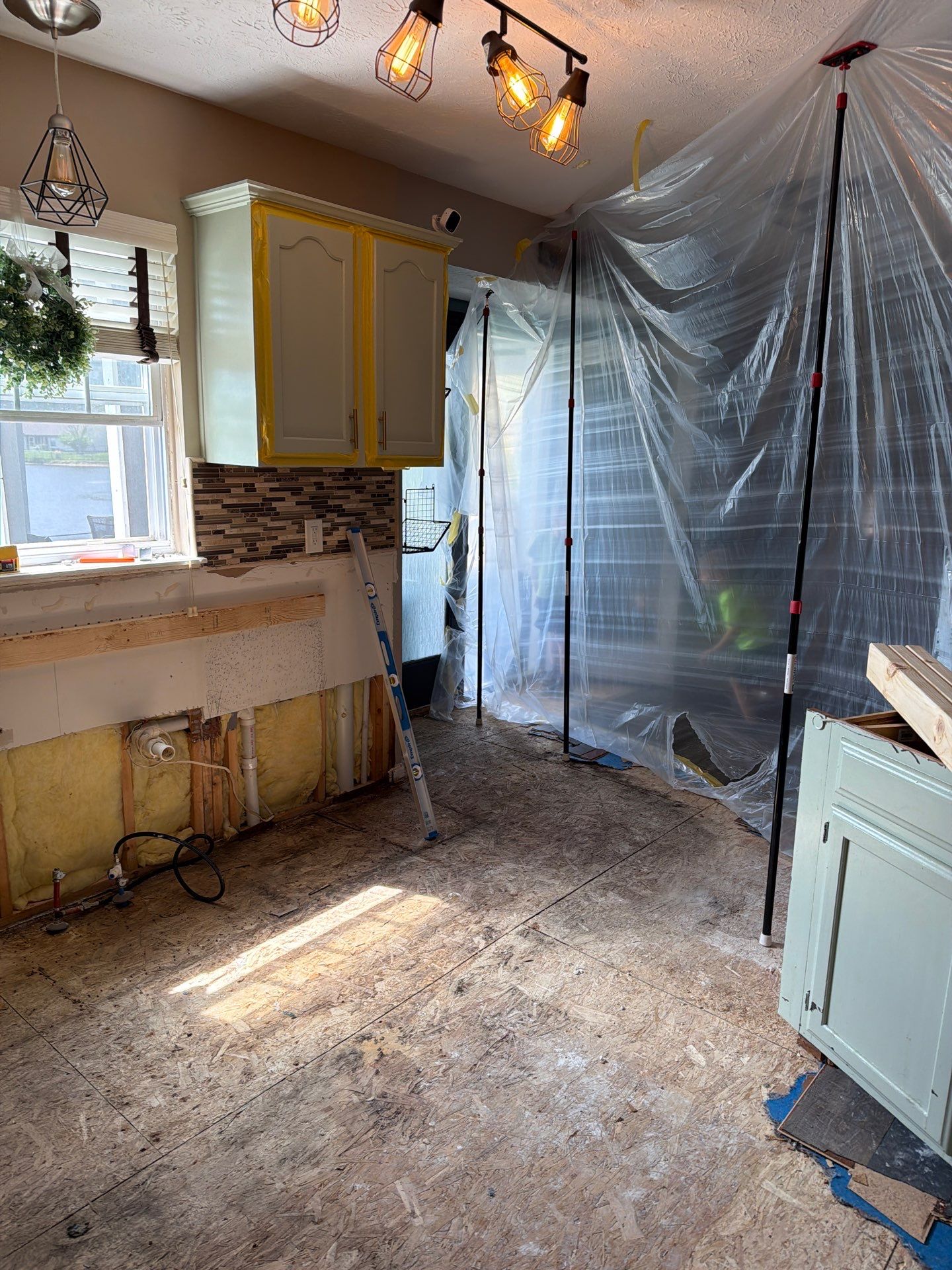
Step by-Step Response Protocol
- Confirm the source within the first 15 minutes. Foundation intrusion looks like plumbing failure and vice versa. Shut the main water valve, check for active supply leaks, then return to the suspect crack. If flow continues with water off, the source is exterior groundwater, surface runoff, or a failed exterior waterproofing membrane.
- Photograph the crack with a scale reference. Place a ruler or coin next to the fissure. Document width at the top, middle, and bottom. Hairline cracks measure under 0.010 inches. Structural cracks measure 0.125 inches or wider, often with horizontal displacement.
- Measure ambient and material moisture. Target readings: concrete wall surface above 4.5% MC on a pin type meter indicates active wetting. Adjacent wood framing should sit at 12 to 15% MC in Swayzee. Anything above 19% MC in framing triggers Category 2 protocols per IICRC water category classifications.
- Map the wet footprint using thermal imaging. A FLIR or equivalent camera will show a cold signature trailing 2 to 6 feet from the crack along the slab. Mark the perimeter with painter's tape. This becomes your containment boundary.
- Extract standing water before any demolition. Use a truck mount or portable extractor rated at 100+ inches of water lift. Standing water deeper than 0.25 inches must be removed before air movers are placed, otherwise you are aerosolizing contaminants.
- Open the wall cavity if insulation is wet. Cut drywall 24 inches above the high water mark, in 4 foot increments to match replacement sheets. Bag and remove fiberglass batts that read above 30% MC. Closed cell foam can often stay if surface moisture is below 4% after 48 hours of drying.
- Treat the crack itself only after the cavity is dry. Hydraulic cement plugs active leaks in 3 to 5 minutes. For longer term repair, polyurethane injection seals cracks 0.002 to 0.25 inches wide and remains flexible through freeze thaw cycles common to Swayzee winters.
- Establish drying conditions. Deploy LGR dehumidifiers at one unit per 1,200 to 1,500 sq ft of affected area. Target 30 to 40% relative humidity. Place air movers every 10 to 16 linear feet along wet surfaces, angled at 15 to 45 degrees.
- Monitor daily for 3 to 5 days. Log moisture readings at the same 6 to 10 points each visit. Drying is complete when materials reach within 2 percentage points of unaffected reference areas.
First-Hour Homeowner Actions Before Swayzee Water Restoration Arrives
When you call Swayzee Water Restoration, a crew is dispatched within 2 hours in most cases. Use that window to limit secondary damage with the following sequence.
- Cut power to the affected zone at the breaker. Label the breaker before flipping so the technician can verify on arrival. Do not stand in water to reach a panel.
- Lift contents 4 inches off the floor. Cardboard boxes wick water in under 10 minutes. Even short elevation on bricks, scrap lumber, or plastic bins prevents loss.
- Pull back carpet from tack strips at the wet edge only. Do not roll the entire room. Partial detachment preserves the option to dry in place.
- Open interior doors, close exterior doors. Cross ventilation between rooms helps. Outdoor air above 60% RH will slow drying.
- Note the time water was first observed. This single data point drives the entire category and class determination.
Typical Drying Timelines by Wall Assembly
Documentation Standards for Insurance
Every reading, every photo, every piece of equipment placement is logged in a daily moisture map. Insurers reimburse documented scopes. They deny vague ones. Our reports include psychrometric readings (temperature, RH, GPP), material moisture content, equipment hours, and affected square footage. Daily logs are timestamped and signed by the lead technician, then uploaded to a shared portal the adjuster can access within 24 hours of each visit. If you are coordinating a claim, our team can also coordinate with basement flooding response documentation already on file when intrusion overlaps with seepage events. Swayzee Water Restoration retains the full file for 7 years, which matches the statute of limitations on most policy disputes in Swayzee.
Decision Points That Change the Scope
- Crack width over 0.25 inches with offset: stop, call a structural engineer before any cosmetic repair. Restoration without structural sign off wastes money.
- Water carrying soil particles: treat as Category 2 at minimum. Soil microbes elevate bioburden within 48 hours per the 48 hour mold growth rule.
- Recurring intrusion after every rain: the fix is exterior. Interior drainage and sump systems manage symptoms, but exterior excavation, membrane repair, and footing drain installation address cause.
- Finished basement with carpet and pad: pad almost always loses. Carpet may dry if extracted within 24 hours and detached from tack strips.
- Mechanical equipment in the wet zone: elevate or de energize. Water within 6 inches of a furnace base or panel requires electrical inspection before re energizing.
- Efflorescence on the wall face: white mineral bloom indicates chronic moisture migration through the slab or block. Surface paint will not adhere. Strip to bare substrate before any sealer is applied.
- Radon mitigation system present: verify the sub slab seal is intact after any crack injection. A new bypass can shift radon readings by 1 to 3 pCi/L.
Equipment Specifications We Run On Site
- LGR dehumidifier: 130 to 240 pints per day at AHAM conditions
- Axial air movers: 2,800 to 3,400 CFM, low amp draw for 15A circuits
- HEPA air scrubber: 500 to 2,000 CFM with 99.97% filtration at 0.3 microns
- Pin and pinless moisture meters: calibrated monthly, dual scale
- Thermal imaging camera: 320x240 resolution minimum, 0.05 C sensitivity
- Injection pumps: dual component, 1:1 ratio, 1,500 to 2,000 psi for polyurethane and epoxy resins
- Borescope: 5mm camera head for inspecting wall cavities without full demolition
- Hygrometer data loggers: recording temperature and RH at 15 minute intervals across the drying cycle
Crack Repair Methods Ranked by Failure Mode
- Hairline non structural, dry: epoxy injection, 8,000 to 10,000 psi tensile, restores monolithic behavior.
- Active weeping, 0.01 to 0.125 inches: polyurethane injection, expands 4 to 8 times in volume, tolerates ongoing moisture.
- Structural with movement: carbon fiber straps on 24-inch centers, paired with crack injection. Engineer stamp required.
- Cold joint at footing: interior drain tile and sump, since injection cannot bridge a 1 to 2 inch gap reliably.
- Pipe penetration leak: hydrophilic waterstop swelling 200 to 400% on contact, installed in a chased channel around the penetration.